
A message to our members Following Conservation Request during winter storm fern
Over the weekend, Marshall County REMC (MCREMC) posted to Facebook asking members to voluntarily reduce non-essential electricity use in response to a grid reliability notice issued by the Midcontinent Independent System Operator (MISO). We wanted to take a few moments to address concerns and points that were brought up while also providing more information for our members.
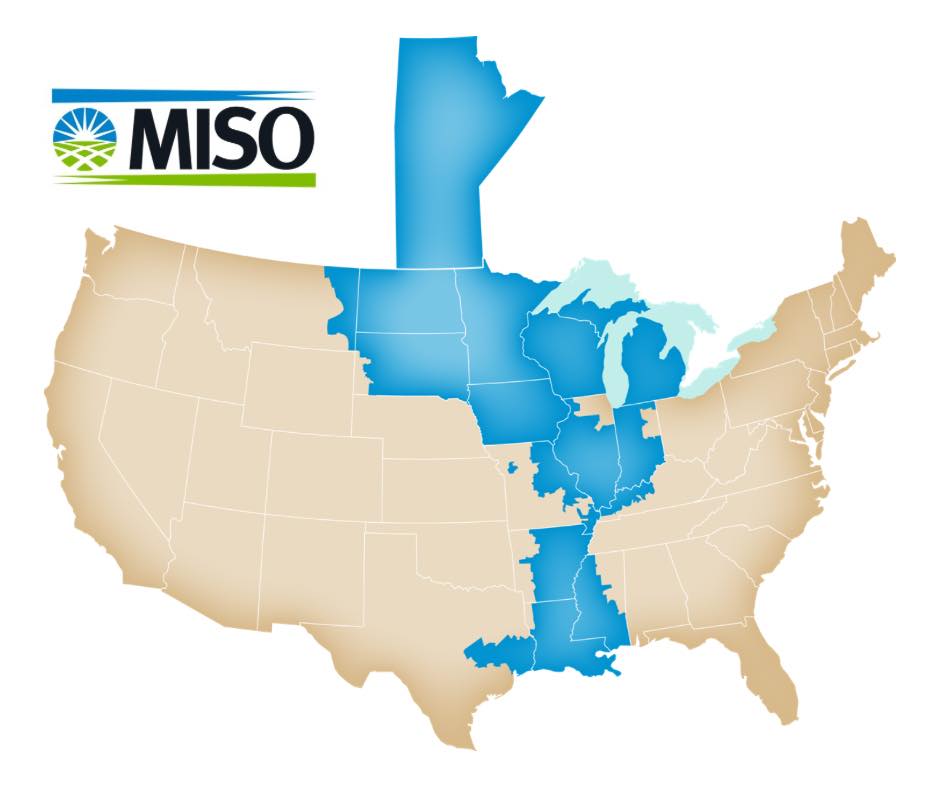
MISO is a regional grid operator responsible for balancing electricity supply and demand across portions of 15 states and the Canadian province of Manitoba.
This notice was relayed to us by our power supplier, Wabash Valley Power Alliance (WVPA), and was prompted by extremely cold temperatures and inclement weather conditions that caused unusually high electricity demand across the MISO regional grid.
Requests like this are issued only during rare and extreme conditions and are intended to help stabilize the grid and reduce the risk of widespread outages.
It’s important to clarify that this request was not related to any issue with Marshall County REMC’s local distribution system. Our equipment and infrastructure were operating normally. The challenge was occurring on the regional grid, well beyond our local service territory.
Understanding Grid Conditions
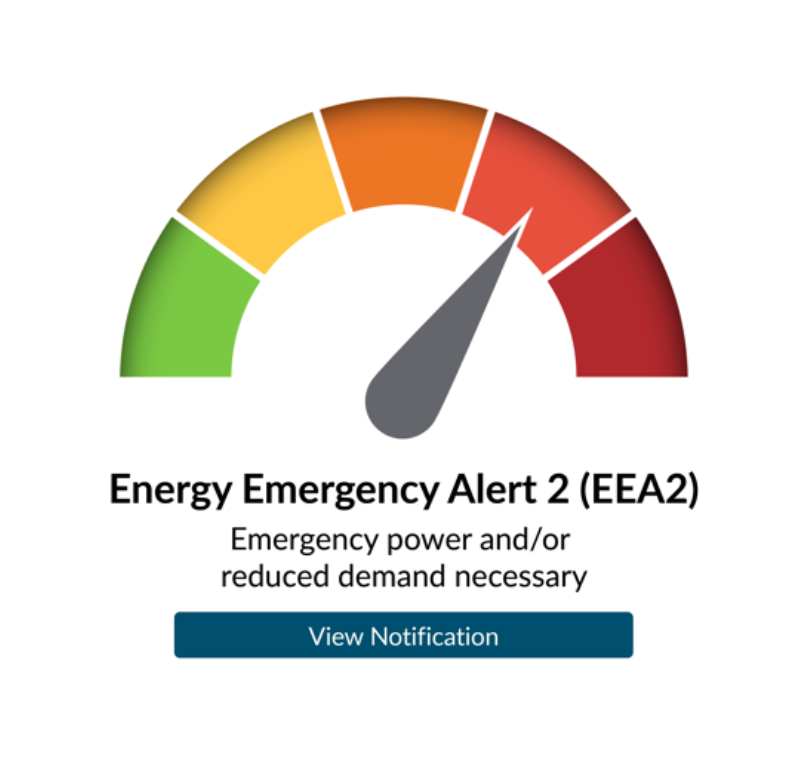
MISO continuously monitors grid conditions and categorizes them into five levels, which are publicly available on MISO’s website and mobile app:
- Green: Normal operations
- Yellow: Advisory or warning conditions
- Orange: Elevated risk that demand could exceed supply
- Dark Orange: Emergency conditions requiring reduced demand (this was the level on Saturday)
- Red: Power interruptions imminent or occurring
When conditions reach emergency levels, utilities across the MISO footprint are asked to take action to help protect the grid as a whole.
Learn more about Grid Conditions on the MISO website.
How Our Cooperative Fits In
Marshall County REMC is a member-owned, not-for-profit electric cooperative. We do not generate electricity or own power plants, nor do we own high-voltage transmission lines. Instead, we purchase wholesale power through WVPA, which secures electricity from generation resources coordinated through MISO. That power is delivered to our substations and distributed to our members.
Because of this structure, when grid emergencies occur, they affect all utilities and cooperatives within the region — not just one community or one state.
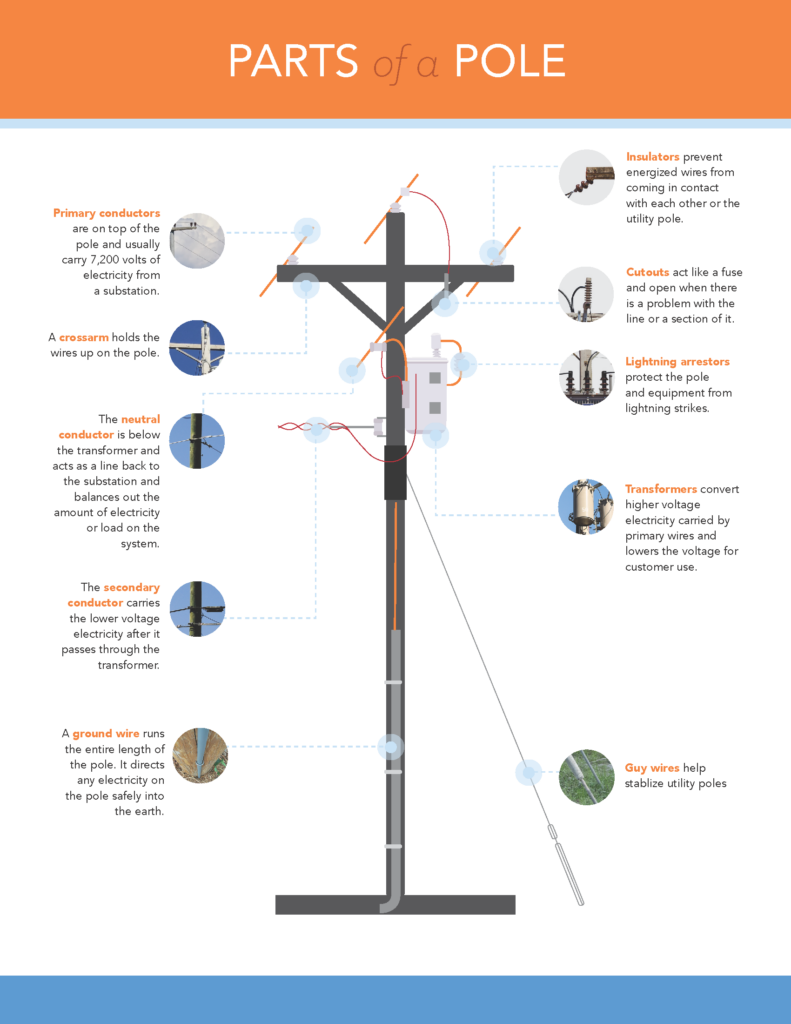
This graphic displays the parts of a distribution pole MCREMC has throughout our system. Distribution poles are different than transmission and generation. (graphic available in larger format below)
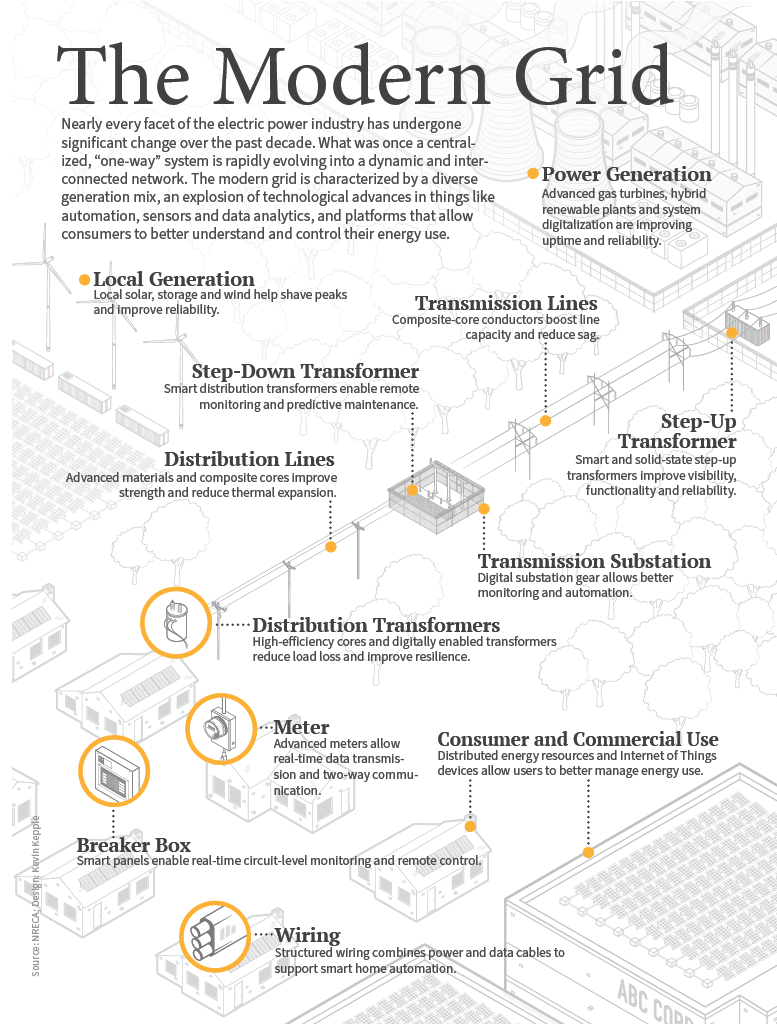
This graphic displays the parts of a modern grid from generation to the path to the home. MCREMC is a distribution cooperative and maintains and builds distribution lines only. (graphic available in larger format below)
The Bigger Picture
This past weekend, large portions of the southern United States experienced a historic winter storm in areas that typically see much milder weather. Millions of people were forced indoors, relying heavily on electricity to stay warm and safe. In some areas, severe weather also damaged infrastructure, leaving families without power altogether.
While northern Indiana was less impacted, the strain on the grid was regional. Proactive conservation requests were issued across the entire MISO footprint — not just to Hoosiers — because maintaining balance on the grid helps protect everyone.
Your voluntary actions, even here at home, played a role in helping keep electricity available across the MISO region during a critical time. That matters.
Addressing Questions About Data Centers
We’ve seen and heard your concerns regarding data centers and their impact on the electric grid and our service territory. At this time, there are no data centers located in Marshall County or served by Marshall County REMC, and a county moratorium against them is currently in place.
When conservation notices are issued by MISO or other grid operators, all consumers, customers and/or members — residential, commercial, and large power users — are expected to take steps to reduce usage where possible. While we do not have specific information regarding data centers across the nation and the toll they take on the grid, we commit to being transparent with our members if anything changes regarding data centers within our local/immediate service territory.
Rising Costs & Your Power Bill
We understand the frustration surrounding electric bills, and we recognize our responsibility to keep electric bills as low as possible for our members.
Across the utility industry, costs have increased significantly over the past five years — in some cases by 20% to more than 100% — due to rising fuel prices, supply chain challenges, increased cost of materials, infrastructure investments, and regulatory requirements. Despite these industry-wide pressures, Marshall County REMC has implemented only one rate increase since 2012, which went into effect in 2022.
Our leadership and Board of Directors prioritize keeping electricity as affordable as possible while continuing to operate safely, reliably, and as innovatively as possible. It is our job to manage the costs we can control before we ever ask members to pay more for their energy. To ensure this balance, we regularly conduct comprehensive rate studies that evaluate all aspects of our operations, including electrical system maintenance and replacement, tree trimming, outage restoration, taxes, insurance, materials, fuel costs, and day-to-day administration of the cooperative.
Because Marshall County REMC is owned and operated by its members, we also have the ability to reinvest in the people and communities we serve. This includes returning margins through capital credits, supporting youth programs such as 4-H and Camp Kilowatt and Youth Tour, giving back to our community via Operation Round Up, and other member-focused initiatives.
While pricing pressures are real, our mission has not changed: to provide safe, reliable, and affordable electricity at cost while putting our members first. As a cooperative, we do not answer to shareholders — we answer to you.
Thank You for Your Feedback
Finally, we want our members to know this: your feedback matters. Positive or negative, we read it, we consider it, and we use it to improve how we serve you.
We use platforms like Facebook to stay connected and informed, and while we understand emotions can run high – especially during stressful situations – we truly want to help explain, listen, and engage. If something doesn’t make sense, we encourage you to ask. Transparency and trust are not one-way conversations.
Thank you for being a part of our cooperative and for helping us serve our community – and the broader region – when it mattered most.
Cooperatively yours,
The Marshall County REMC Team
Learn More
Grid Reliability & Conservation Request - Frequently Asked Questions (FAQs)
MCREMC issued a voluntary conservation request after receiving a grid reliability notice from our power supplier, Wabash Valley Power Alliance (WVPA), which was relayed by the Midcontinent Independent System Operator (MISO). Extreme cold across much of the country caused unusually high demand on the regional electric grid, prompting the request.
No. Our local distribution system was operating normally. The concern was related to regional grid conditions, not any issue within MCREMC’s service territory.
Midcontinent Independent System Operator (MISO) is the regional grid operator responsible for balancing electricity supply and demand across parts of 15 states and the Canadian province of Manitoba. When demand approaches or exceeds available supply, MISO issues alerts to utilities and consumers they work with across the region to help prevent widespread outages.
These requests are rare and only issued during extreme conditions, such as severe cold or heat, when the grid is under significant strain.
The electric grid is interconnected. Even if our local area is less affected, high demand or outages elsewhere can impact the entire system. Reducing usage where possible helps stabilize the grid and protect power availability for everyone.
No. MCREMC is a member-owned, not-for-profit electric cooperative. We do not own power plants or high-voltage transmission lines. We purchase wholesale power through WVPA, which secures electricity through regional markets coordinated by MISO.
There are currently no data centers located in Marshall County or served by MCREMC. Additionally, there is a moratorium in place against them in our county.
If anything changes in our service territory, we will be transparent and communicate with our members.
Yes. When grid emergencies occur, all consumers – are expected to reduce non-essential electricity use whenever possible.
Yes. Even small, voluntary reductions – when done collectively – can help stabalize the grid during emergency conditions and reduce the risk of outages.
We share important updates through our website and social media channels. Members can also monitor real-time grid conditions directly through MISO’s website or mobile app.
Absolutely. We value member feedback and view it as an opportunity to improve communication and understanding. We encourage members to ask questions, share concerns, and stay engaged with their cooperative.